
Table of Contents
- Why Renovation Project Management Matters for Busy Families
- Setting Clear Goals and Expectations Before Work Begins
- Home Renovation Planning in Canada: Budgeting and Timeline Essentials
- Hiring a Renovation Contractor in BC: Credentials and Communication
- Renovation Permits and Inspections in British Columbia
- Managing Home Renovations with Kids: Practical Strategies
- Managing Stress and Mental Health During Renovation Project Management
- Post-Renovation: Settling Back Into Routines and Organisation
Last Updated: July 23, 2026
Why Renovation Project Management Matters for Busy Families
Juggling work, school runs, and household responsibilities while managing a major home renovation feels impossible. Yet families across the Lower Mainland undertake kitchen, bathroom, and full-home renovations every year, often without a structured approach. Without clear planning, communication protocols, and realistic expectations, a three-month kitchen renovation can stretch to six months while costs climb unpredictably.
At White Rock Handyman & Renovations, we’ve worked with hundreds of families across Surrey, White Rock, Langley, and Delta. The ones who maintain sanity and stay on budget approach renovation project management as a structured process from day one, not an afterthought.
Setting Clear Goals and Expectations Before Work Begins
Before you contact a contractor or sign anything, sit down as a family and define what “success” looks like. Are you renovating to increase home value? To improve daily functionality? To fix a safety issue? Each goal shapes your timeline, budget, and contractor choice differently.
Document your must-haves separately from your nice-to-haves. If you must have a walk-in pantry but a second sink is optional, say so explicitly in your contractor conversations. This prevents scope creep, the silent killer of renovation budgets and timelines.
Set realistic expectations about disruption. If you’re renovating your only bathroom, your family will face genuine inconvenience. Decide whether you’ll use a nearby gym for showers, stay with family, or use a portable toilet on-site.
Home Renovation Planning in Canada: Budgeting and Timeline Essentials
Renovation project management for busy families hinges on two interconnected realities: budgets and timelines. In British Columbia, both are subject to permit requirements, inspection schedules, and contractor availability, factors outside your direct control.
Creating a Detailed Project Schedule
A realistic timeline starts with understanding what must happen sequentially versus what can overlap. Demolition must happen before framing. Framing must happen before electrical rough-in. But while the electrician works, your contractor can order custom cabinetry or schedule the plumber for the following week.
For busy families, the schedule should account for your own availability too. If you need to approve material selections or finishes, block time on your calendar when the contractor expects decisions. Delays in your approvals directly delay their work.
Use a simple project timeline tool or spreadsheet. List major phases: demolition, rough-ins (electrical, plumbing, HVAC), drywall, finishing trades, final inspections. A bathroom renovation typically takes six to ten weeks. A kitchen renovation ranges from eight to sixteen weeks depending on complexity. A full-home renovation can stretch six months to a year. Build in buffer time, if your contractor estimates eight weeks, plan for ten.
Building Your Renovation Budget
Budgeting means understanding three cost categories: fixed costs, variable costs, and contingency.
Fixed costs are known upfront: contractor labour, permits, inspections, and specific materials you’ve already selected. These should be detailed in your written quote. Never accept a quote without itemization.
Variable costs emerge as work progresses. Once walls are open, your contractor might discover rotted framing, outdated wiring, or plumbing that doesn’t meet current code. Budget ten to fifteen percent above your fixed costs as contingency specifically for these unknowns.
Ask your contractor directly: What permits are required? Who pays for inspections? Are there code upgrades needed? In British Columbia, bathroom and kitchen renovations typically require municipal permits and WorkSafeBC clearance letters if structural work is involved.
A detailed budget spreadsheet tracks spending against estimates. When a contractor requests a change order, you can see immediately whether it fits your contingency or requires a difficult conversation about scope reduction.
|
Phase |
Estimated Cost |
Actual Cost |
Status |
Notes |
|---|---|---|---|---|
|
Permits & Inspections |
Municipal + WorkSafeBC |
|||
|
Demolition |
Labour + disposal |
|||
|
Rough-ins (Electrical/Plumbing) |
Code compliance |
|||
|
Drywall & Finishing |
Labour + materials |
|||
|
Final Trades & Cleanup |
Painting, flooring, fixtures |
|||
|
Contingency (10-15%) |
For unknowns |
Hiring a Renovation Contractor in BC: Credentials and Communication
Choosing the right contractor shapes your entire renovation experience. A licensed, insured, and bonded contractor protects you legally and financially. An unlicensed contractor might offer lower quotes, but if something goes wrong, injury on-site, damage to adjacent areas, code violations, you’re liable.
Verifying WorkSafeBC Clearance and Insurance
Before signing a contract, verify three things: WorkSafeBC clearance, Commercial General Liability (CGL) insurance, and municipal business licensing.
WorkSafeBC clearance confirms the contractor is registered and compliant with workplace safety standards. Ask for a clearance letter directly. This is non-negotiable for any structural work, electrical work, or plumbing.
Commercial General Liability insurance protects you if someone is injured on your property or if the contractor damages your home or a neighbour’s property. Request a certificate of insurance naming you as an additional insured.
Municipal business licensing varies by location (Surrey, White Rock, Langley, Delta all have different requirements). Ask your contractor for proof of licensing in your municipality.
White Rock Handyman & Renovations carries all three credentials and provides detailed documentation upfront so homeowners know exactly what protections are in place.
Establishing Ongoing Communication Protocols
Once you’ve hired a contractor, establish how you’ll communicate. Will you speak daily, weekly, or as-needed? Who’s the point person if the homeowner has questions? What’s the process for approving change orders?
Many renovation delays stem from miscommunication, not actual construction problems. Set expectations clearly: schedule a brief weekly check-in, establish a single point of contact on both sides, use email or text for non-urgent questions so there’s a record, agree on a timeline for approving changes (ideally within 48 hours), and discuss how to handle unexpected issues discovered during work.
Renovation Permits and Inspections in British Columbia
Permits aren’t bureaucratic obstacles, they’re your protection. They ensure work meets code, which protects your family’s safety and your home’s resale value.
In British Columbia, most kitchen and bathroom renovations require municipal permits. Structural changes, electrical work, plumbing, and HVAC modifications almost always require permits. Your contractor should handle the permit application, but you need to understand the process.
Permits involve inspections at key stages: after rough-ins, after drywall, and after final work. These inspections delay the project by a few days to a week per inspection, but they’re non-negotiable. A home that passes all inspections and receives a final permit certificate is legally compliant and insurable.
Ask your contractor upfront: Which inspections are required for your specific project? How long does each typically take? What happens if work doesn’t pass inspection? Usually, the contractor makes corrections and requests a re-inspection at no additional cost, but this extends the timeline.
WorkSafeBC also oversees certain renovations. If your project involves structural work or significant electrical or plumbing changes, WorkSafeBC clearance is required before work begins. Your contractor should manage this, but confirm it’s part of their process.
Managing Home Renovations with Kids: Practical Strategies
Renovation project management for busy families becomes deeply personal when children are involved. You’re managing a construction site while maintaining your children’s routines, safety, and emotional well-being.
Minimising Disruption to Daily Routines
Children thrive on predictability. A renovation creates chaos, but you can contain it.
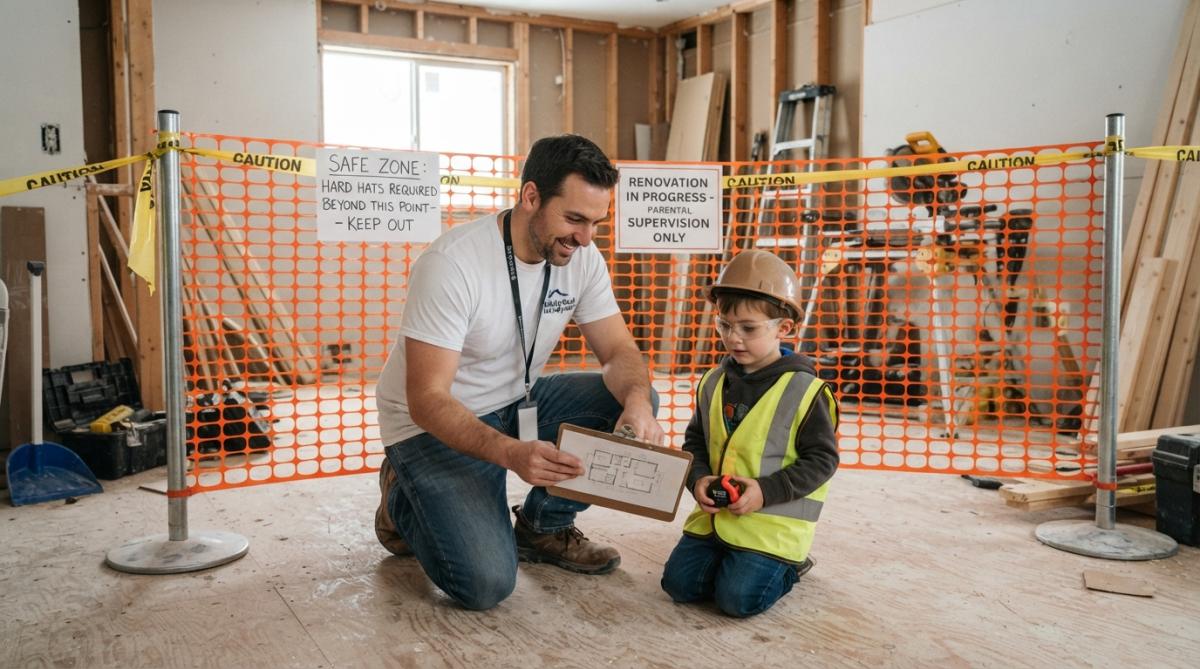
Establish a “construction zone” that’s off-limits to kids. Use plastic sheeting, barriers, or closed doors to physically separate the work area from living spaces. This reduces dust in bedrooms and living areas, making the home feel less chaotic.
Maintain non-negotiable routines. If your family has dinner together at 6 p.m., protect that time. If bedtime is 8 p.m., keep it. These anchors give kids (and parents) stability when everything else feels uncertain.
Communicate with your kids honestly but age-appropriately. Young children don’t need a full explanation of renovation scope. But they do need to know: “The kitchen will be loud and messy for six weeks. We’ll eat dinner in the living room. You can’t play in the kitchen. Here’s what it will look like when it’s done.”
Plan for the specific disruptions your renovation will create. If your only bathroom is being renovated, arrange gym access, stay with family, or rent a portable toilet.
(/best-home-renovation-services-in-delta-2026-guide/)s with Kids: Practical Strategies]
Protecting Children’s Safety and Well-Being
Construction sites are hazardous. Your contractor is responsible for site safety, but you’re responsible for your kids.
Establish a safety perimeter. No children in the work area without direct adult supervision. No climbing on materials, touching tools, or playing near equipment. If your kids are old enough, explain why: sharp tools, heavy materials, dust that hurts lungs.
Dust control matters more than many families realize. Construction dust contains particles that irritate lungs and sinuses, especially in young children. Ask your contractor about dust containment: Are they using plastic sheeting? Running HEPA filters? Sealing off the work area?
Noise is another factor. Power tools create sustained noise that disrupts sleep and concentration. If your kids’ bedrooms are near the work area, consider temporary earplugs or white noise machines. Some families arrange for kids to stay with grandparents or friends during the loudest phases of work.
Acknowledge renovation stress openly. Some kids regress (bedwetting, clinginess). Others become withdrawn. Validate their frustration. Maintain routines. Keep them involved in age-appropriate ways (“You get to pick the paint colour for your room”).
Managing Stress and Mental Health During Renovation Project Management
Renovation stress isn’t just about timelines and budgets. It’s emotional. Your home is being torn apart. Your routines are disrupted. Your family is living in chaos. Months of disruption accumulate. Parents report difficulty sleeping, increased anxiety, conflict with partners, and exhaustion.
Acknowledge the stress openly. Don’t pretend it’s fine. Tell your partner, your kids, and yourself: “This is hard. It’s temporary. We’re managing it together.” This normalizes the difficulty and prevents resentment from building silently.
Build in stress relief. If you normally exercise, prioritize it during the renovation. If you need quiet time, schedule it. If you need support, ask for it. Some families benefit from weekly check-ins with their partner to discuss frustrations before they become arguments.
Set boundaries with your contractor. They’re working hard, but your home is your sanctuary. If work extends past 5 p.m., if contractors show up on weekends without permission, if the site is messier than expected, address it immediately.
Celebrate small wins. When the old kitchen is demolished and you can see the potential, celebrate. When the drywall goes up and rooms take shape, celebrate. When the final inspection passes, celebrate.
Post-Renovation: Settling Back Into Routines and Organisation
The renovation is finished. The contractor has left. The final inspection passed. But your family isn’t automatically back to normal. The post-renovation phase is often overlooked, yet it’s crucial for actually enjoying your new space and restoring your family’s equilibrium.
Give yourself permission to rest. Renovation projects are exhausting. Take a week or two to simply live in your new space without making changes or additions.
Address the organizational chaos that renovation creates. Deep clean the entire house, not just the renovated area. This isn’t just about cleanliness, it’s about reclaiming your space psychologically.
Help your kids re-adjust. A new kitchen or bathroom changes the home they know. Let them explore, ask questions, and express opinions about the changes. If they’re old enough, involve them in organizing the new space.
Document the process. Keep receipts, permits, and inspection certificates in a folder. This documentation is valuable for insurance, future renovations, and home sales.
Finally, schedule a family meeting to debrief the renovation experience. What went well? What was harder than expected? What would you do differently next time? This conversation closes the chapter emotionally and extracts lessons for any future projects.
Renovation project management for busy families isn’t about perfection. It’s about structure, communication, and realistic expectations. When you plan deliberately, hire a qualified contractor, and protect your family’s well-being throughout the process, you transform a potentially chaotic experience into a manageable project with a clear outcome.
White Rock Handyman & Renovations has guided hundreds of Lower Mainland families through renovations of all sizes. Our experience, WorkSafeBC clearance, Commercial General Liability insurance, and municipal business licensing in Surrey, White Rock, Langley, and Delta ensure your project is handled professionally from start to finish. We provide detailed quotes with no hidden fees, transparent communication throughout, and a commitment to completing your renovation on time and to code.
Get a free estimate today and start your renovation with confidence.
Frequently Asked Questions
What are the key steps for successful renovation project management for homeowners in BC?
Start by setting clear goals and a realistic budget, then create a detailed timeline with milestones. Hire a licensed, insured contractor with WorkSafeBC clearance and municipal business licensing for your area (Surrey, White Rock, etc.). Establish communication protocols, understand permit requirements, and plan for disruption to your family's routines. Throughout the project, use tools like spreadsheets or project management apps to track expenses, milestones, and contractor progress. Finally, conduct a final walkthrough and punch-list review before project completion.
How do I choose the right renovation contractor in BC for a family project?
Verify that any contractor holds valid WorkSafeBC clearance letters, carries Commercial General Liability (CGL) insurance, and holds municipal business licensing for your location. Request detailed quotes with no hidden fees, check references, and confirm they understand your timeline and family needs. Ask how they manage communication, site safety, and disruption—especially if you have young children. A reputable contractor will provide transparent pricing, keep you informed of progress, and handle all permits and inspections required in British Columbia.
What permits and inspections are required for home renovations in British Columbia?
Permit requirements vary by project scope and municipality. Kitchen and bathroom renovations, structural changes, electrical work, and plumbing typically require permits from your local authority (Surrey, White Rock, Langley, etc.). Your contractor should handle permit applications and coordinate inspections with the municipality. Skipping permits can result in fines, complications with insurance claims, and difficulty selling your home. Always confirm permit needs with your local building department before work begins.
How can I manage renovation stress and keep my family's mental health in check?
Acknowledge that renovations are disruptive—establish realistic expectations with your family beforehand. Create a temporary 'normal' by maintaining routines where possible: set meal times, homework schedules, and quiet zones away from construction noise. Schedule regular check-ins with your contractor to reduce uncertainty. Build in buffer time in your timeline to ease pressure. Take breaks from decision-making, delegate tasks to family members, and remember that temporary inconvenience leads to long-term home improvement. After completion, celebrate the achievement and gradually settle back into your refreshed space.