
Table of Contents
- Why Verify Contractor License Before Hiring
- Types of Contractor Licences in British Columbia
- How to Verify Contractor Licence Using BC Housing Registry
- Technical Safety BC Contractor Search for Regulated Work
- WorkSafeBC Clearance Letter and Contractor Status
- Hiring a Contractor in BC: Essential Verification Checklist
- Red Flags of Fake Licences and Unlicensed Contractors
- Insurance vs. Licensing: Understanding Both Requirements
Verify Contractor License in British Columbia: A Step-by-Step Guide
Last Updated: July 14, 2026
When you’re hiring someone to renovate your kitchen, rewire your home, or install a new furnace, the stakes are high. A licensed contractor protects your investment, ensures work meets code, and gives you legal recourse if something goes wrong. This guide explains how to verify contractor license in british columbia, a critical step that many homeowners skip, often to their regret.
Unlicensed contractors account for a significant portion of substandard work complaints in the province. Protecting yourself takes less than 15 minutes. Below, we’ll show you exactly where to look, what to check, and what red flags should make you walk away.
Why Verify Contractor License Before Hiring
Hiring an unlicensed contractor might save money upfront, but the real costs come later. A contractor without proper licensing hasn’t passed trade exams, may not carry liability insurance, and operates outside regulatory oversight. If something goes wrong, structural damage, electrical hazards, code violations, you have no legal recourse and no insurance protection.
Licensed contractors have invested time and money to earn their credentials. They’ve demonstrated competency in their trade, carry Commercial General Liability (CGL) insurance, and maintain WorkSafeBC clearance letters proving they meet safety standards. When you hire a licensed professional in British Columbia, you’re buying accountability.
BC has multiple registries depending on the trade. Electrical work, gas fitting, and boiler safety fall under Technical Safety BC. Residential building and general contracting use the BC Housing Licence Registry. Knowing which registry to check is half the battle.
Types of Contractor Licences in British Columbia
British Columbia regulates contractors through multiple pathways depending on the work being performed.
Licensed Residential Builder
A Licensed Residential Builder (LRB) licence is issued by BC Housing and covers residential construction projects including new homes, renovations, and additions. The contractor must pass exams on building codes, contract law, and safety practices, maintain a performance bond, and carry CGL insurance.
When you hire someone for a kitchen renovation or bathroom remodel, check for an LRB licence. This is the primary credential for residential work in BC. If a contractor claims to do residential work without this licence, they’re operating illegally.
General Contractor and Tradesperson Certification
A General Contractor licence covers broader construction work and project management. Tradesperson certification is specific to individual trades like carpentry, masonry, and roofing. Many contractors hold both a general licence and specific trade certifications, meaning they can manage a project and perform specialized work. When verifying, ask which specific trades they’re certified in.
Regulated Trades (Electrical, Gas, Boiler Safety)
Electrical work, gas fitting, and boiler safety are heavily regulated in BC because of safety risks. These trades require separate certification from Technical Safety BC. An electrician must hold a Certificate of Qualification or an apprenticeship card issued by the province. Gas contractors must be certified by Technical Safety BC and carry a valid gas fitter’s licence. These are legally required credentials, not optional.
How to Verify Contractor Licence Using BC Housing Registry
The BC Housing Licence Registry is your first stop for residential contractors. This searchable database is free and takes less than five minutes to search.
Step-by-Step Verification Process
Step 1: Visit the BC Housing Registry website. Go to the official BC Housing Licence Registry portal and locate the search box on the homepage.
Step 2: Enter the contractor’s name or licence number. You can search by business name, individual name, or licence number. The system returns results instantly.
Step 3: Review the licence details. The registry shows the licence number, issue date, expiration date, and any conditions or restrictions. Check that the licence is current, an expired licence means they’re no longer authorized to work.
Step 4: Note the trade designation. The registry specifies what type of work the licence covers. Verify they hold a licence for the specific work you need.
Step 5: Cross-reference with their business card or quote. The licence number on the registry should match the number they’ve provided. Mismatches indicate fraud or outdated information.
|
Step |
Action |
Time |
|---|---|---|
|
1 |
Visit BC Housing Registry |
1 minute |
|
2 |
Search by name or licence number |
2 minutes |
|
3 |
Verify licence is current |
1 minute |
|
4 |
Check trade designation |
1 minute |
|
5 |
Confirm licence number matches |
1 minute |
Understanding Licence Status and Authenticity Check
A current licence shows the contractor is in good standing with BC Housing. An expired licence means they’re no longer authorized to work. Some contractors have conditions attached to their licence, such as restrictions on project size or mandatory supervision. Read these carefully.
The registry also shows complaint history in some cases. A few complaints over a 20-year career is normal. A pattern of recent complaints suggests problems.
Technical Safety BC Contractor Search for Regulated Work
For electrical, gas, and boiler safety work, Technical Safety BC maintains a separate registry. If your project involves any of these trades, you must verify credentials through this system.
Verifying Electrical, Gas, and Boiler Safety Licences
Electrical contractors must hold a Certificate of Qualification or be an apprentice under supervision. The certificate shows the contractor’s competency level: journeyperson (fully qualified) or apprentice (limited work under supervision).
Gas contractors require a gas fitter’s licence from Technical Safety BC, covering natural gas, propane, and other fuel installations. Only a licensed gas fitter can legally perform this work.
Boiler technicians need boiler and pressure vessel certification, covering heating systems and pressure equipment. The certification proves they understand safety codes and can install equipment to provincial standards.
To verify these credentials, visit the Technical Safety BC website and use their contractor search tool. Enter the contractor’s name or licence number. The system returns their certification level, expiration date, and any restrictions. Unlike the BC Housing registry, Technical Safety BC credentials expire and must be renewed regularly.
WorkSafeBC Clearance Letter and Contractor Status
A WorkSafeBC clearance letter is proof that a contractor is in good standing with the provincial workers’ compensation system. This document confirms they’ve paid their premiums, maintained required coverage, and have no outstanding violations.
What a WorkSafeBC Clearance Letter Means
When a contractor has employees, they must register with WorkSafeBC and pay premiums based on payroll. The clearance letter proves they’re current on payments and haven’t been shut down for safety violations. A contractor without a current clearance letter is either uninsured or operating illegally.
The clearance letter also indicates the contractor’s safety record. A contractor with a clean record has fewer injuries and violations. For homeowners, the clearance letter matters because it shows the contractor takes worker safety seriously and can cover any injuries that occur on your property.
How to Request and Verify Clearance
Ask the contractor for a copy of their current WorkSafeBC clearance letter. Legitimate contractors keep these on file and provide them readily. If they hesitate, that’s a red flag.
You can also verify clearance directly with WorkSafeBC using their online search tool or contractor verification line. Provide the contractor’s name and business. WorkSafeBC will confirm whether they’re registered, current on premiums, and in good standing.
A current clearance letter should show:
- Contractor name and business name matching their quote
- Current expiration date (not expired)
- No outstanding violations or safety orders
- Active registration status
Hiring a Contractor in BC: Essential Verification Checklist
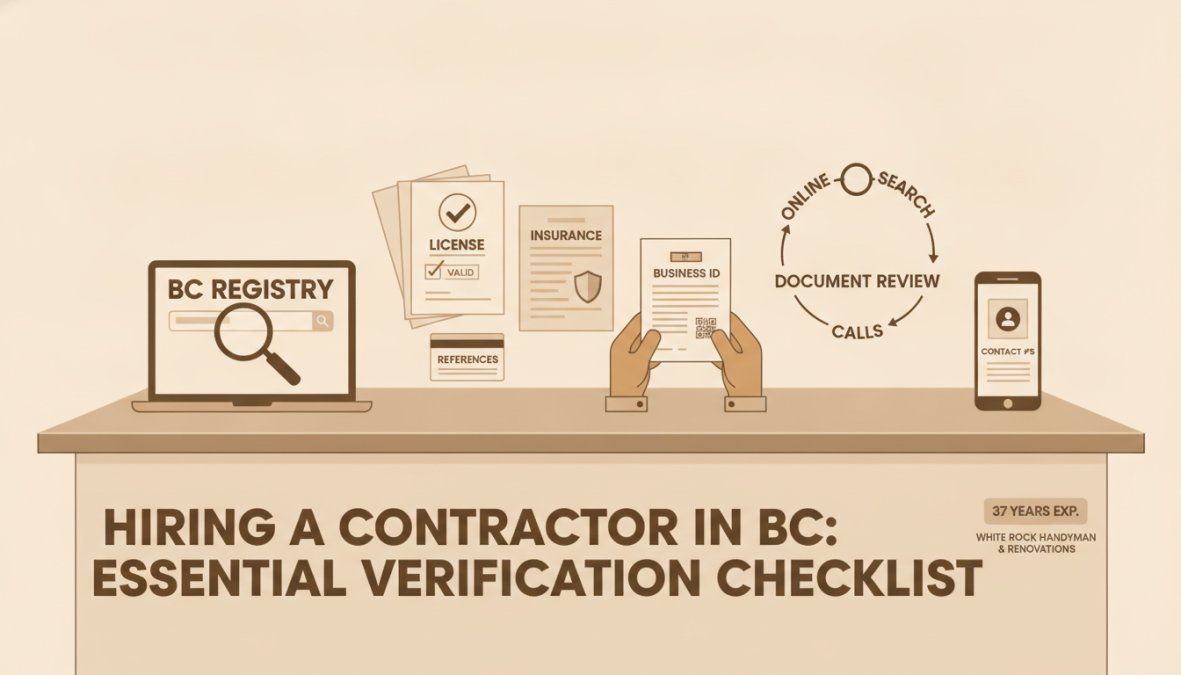
Before signing a contract, run through this checklist to ensure the contractor is legitimate and qualified for your specific project.
Licence and Insurance Verification Steps
Get the contractor’s full legal name, business name, and licence number. Search the BC Housing Licence Registry for residential work or Technical Safety BC for electrical, gas, and boiler work. Confirm the licence is current and covers the specific work you need done.
Next, verify insurance. Ask for a copy of their CGL insurance certificate showing the policy number, coverage limits, and expiration date. The coverage should be at least $2 million for residential work. Call the insurance company to confirm the policy is active.
Request a WorkSafeBC clearance letter. Ask for references from recent projects and contact at least three homeowners who’ve used this contractor in the past year.
Municipal Business Licensing Requirements
Contractors must hold municipal business licences in the cities where they operate. Call your municipal business licensing office and confirm the contractor is registered to do business in your city. A municipal business licence confirms they’re paying local taxes and operating within the community legally.
|
Verification Step |
Where to Check |
Time Required |
|---|---|---|
|
Provincial licence |
BC Housing or Technical Safety BC |
5 minutes |
|
Insurance certificate |
Request from contractor, verify with insurer |
10 minutes |
|
WorkSafeBC clearance |
Request from contractor or WorkSafeBC |
5 minutes |
|
References |
Contact previous clients |
20 minutes |
|
Municipal licence |
City business licensing office |
5 minutes |
Red Flags of Fake Licences and Unlicensed Contractors
Some contractors operate with fake or fraudulent credentials. Others work without any licence at all. Knowing the red flags helps you spot these operators before they take your money.
Warning Signs to Watch For
They can’t produce a licence number. A legitimate contractor has their licence number readily available. If they fumble or give you a number that doesn’t match the registry, that’s a major red flag.
The licence number doesn’t appear in the registry. Search BC Housing or Technical Safety BC. If the number doesn’t return a match, they’re either lying or using an expired licence.
They pressure you to pay cash or in full upfront. Licensed contractors accept cheques, transfers, and credit cards and invoice for work completed. Cash-only contractors often have something to hide.
They avoid discussing insurance or WorkSafeBC coverage. Legitimate contractors discuss insurance proudly. If they change the subject or claim they don’t need it, they’re operating illegally.
They offer a price significantly lower than other quotes. If three contractors quote $15,000 and one quotes $8,000, the low bidder is likely cutting corners, using unlicensed workers, skipping permits, or not carrying insurance.
They won’t provide references or have no online presence. Established contractors have a track record and appear in business directories. A contractor with zero online presence and no references is suspicious.
They claim licensing is unnecessary for their work. Any work that affects structure, electrical, plumbing, or safety requires proper licensing and permits.
What to Do If You Discover Unlicensed Work
If you’ve already hired a contractor and discovered they’re unlicensed, stop work immediately and do not pay them further. Document everything with photos, emails, and receipts. Contact BC Housing or the relevant regulator to report the violation.
Report the unlicensed contractor to:
- BC Housing (for residential building work)
- Technical Safety BC (for electrical, gas, or boiler work)
- WorkSafeBC (if workers were injured or safety standards violated)
- Your municipal business licensing office (for operating without local licensing)
Insurance vs. Licensing: Understanding Both Requirements
Licensing proves competency. Insurance covers financial liability if something goes wrong. You need both.
A licensed contractor has passed exams and proven they know their trade. They understand building codes, safety standards, and best practices.
Insurance covers the financial cost if the contractor damages your property or injures someone. If a worker is injured or faulty work causes a fire, insurance covers damages. Licensing doesn’t provide this protection, only insurance does.
Demand both. A legitimate contractor has current provincial licensing, municipal business registration, WorkSafeBC clearance, and CGL insurance. All four are non-negotiable for residential work in British Columbia.
The verification process takes 20 minutes and protects your investment, your safety, and your home. Skipping it can cost thousands in repairs, void your insurance, and expose your family to hazards. Verify contractor license in british columbia before you sign anything.
The Peace of Mind You Deserve with White Rock Handyman & Renovations
Reading through licensing and insurance requirements can feel overwhelming, but it is the only way to protect your home. At White Rock Handyman & Renovations, we believe in 100% transparency.
We are a fully incorporated company, carry comprehensive Commercial General Liability (CGL) insurance, maintain our WorkSafeBC clearance, and hold the proper municipal licensing for Surrey, White Rock, and the surrounding areas. We proudly provide all our documentation before the job even starts.
Don’t gamble with your biggest investment. Whether you need a quick handyman fix or a major renovation, contact us today for a transparent estimate from a team you can trust (https://whiterockhandyman.ca/contact/).
Frequently Asked Questions
How do I verify a contractor licence in British Columbia?
Start by asking the contractor for their Business Licence Number and verify it through BC Housing's Licensed Residential Builder registry for home renovation work. For regulated trades (electrical, gas, boiler), search Technical Safety BC's database. Always request proof of WorkSafeBC clearance and Commercial General Liability (CGL) insurance. Cross-check municipal business licensing requirements with your local municipality, such as Surrey or White Rock, to ensure full compliance.
What is a WorkSafeBC clearance letter and why do I need to verify it?
A WorkSafeBC clearance letter confirms that a contractor has met workplace safety obligations and has no outstanding compliance issues. Verifying this letter protects you as a homeowner by ensuring the contractor maintains proper safety standards and workers' compensation coverage. You can request this directly from the contractor or contact WorkSafeBC to confirm their status before signing any agreement.
What's the difference between a business licence and a contractor licence in BC?
A business licence is a municipal requirement that permits a company to operate in a specific jurisdiction. A contractor licence, issued by BC Housing or Technical Safety BC, certifies that the contractor has the qualifications and credentials to perform specific trades or renovation work. Both are necessary—a contractor must have both their municipal business licence (e.g., from Surrey or White Rock) and their trade-specific contractor certification to legally perform regulated work.
How do I check if a contractor is licensed for asbestos abatement or other specialized work?
Specialized regulated work like asbestos abatement requires specific tradesperson certification. Verify through Technical Safety BC's contractor registry by searching the contractor's name or Business Licence Number. Confirm they hold a Certificate of Qualification for the specific trade. Always ask for proof of current certification and WorkSafeBC clearance, and ensure they carry adequate Commercial General Liability insurance for hazardous work.