
Table of Contents
- Understanding Bathroom Renovation Costs
- Budget Tiers: What You Get at Each Investment Level
- Key Factors Influencing Your Bathroom Renovation Budget
- Labour Costs and Hiring a Licensed General Contractor
- Bathroom Renovation Permit Requirements and Building Codes
- Custom Tile and Waterproofing Standards for Durability
- Bathroom Renovation Timeline and Project Planning
- Return on Investment and Long-Term Value
Last Updated: August 16, 2026
Understanding Bathroom Renovation Costs
When you’re planning a bathroom renovation, understanding what drives the final price is the first step toward making an informed decision. The cost of bathroom renovation in White Rock varies dramatically depending on scope, materials, and labour, but most homeowners underestimate how many variables affect the bottom line.
At White Rock Handyman & Renovations, we’ve guided homeowners through this process. What we’ve learned is that renovation budgets fail not because homeowners are unrealistic, but because they don’t understand what actually determines cost. A bathroom renovation isn’t a fixed product. It’s a custom project shaped by your choices, your home’s existing conditions, and local building requirements.
The cost of bathroom renovation in White Rock depends on whether you’re updating fixtures in an existing layout or gutting the space for a complete transformation. A simple vanity and fixture replacement follows a different budget path than a walk-in shower installation or a master ensuite overhaul with structural changes. This guide breaks down the real factors that influence your renovation budget, from material selection to labour costs to permit requirements.
Budget Tiers: What You Get at Each Investment Level
Understanding budget tiers helps you visualize what your investment actually delivers. Bathroom renovations typically fall into three distinct categories, each representing a different approach to materials, finishes, and complexity.
A basic renovation focuses on essential updates. This tier replaces worn fixtures, updates the vanity, refreshes tile or flooring, and addresses any immediate plumbing or electrical needs. The work is functional and code-compliant, but finishes are standard-grade materials. This tier works well for rental properties or if you’re selling soon and need the bathroom to be functional rather than a feature.
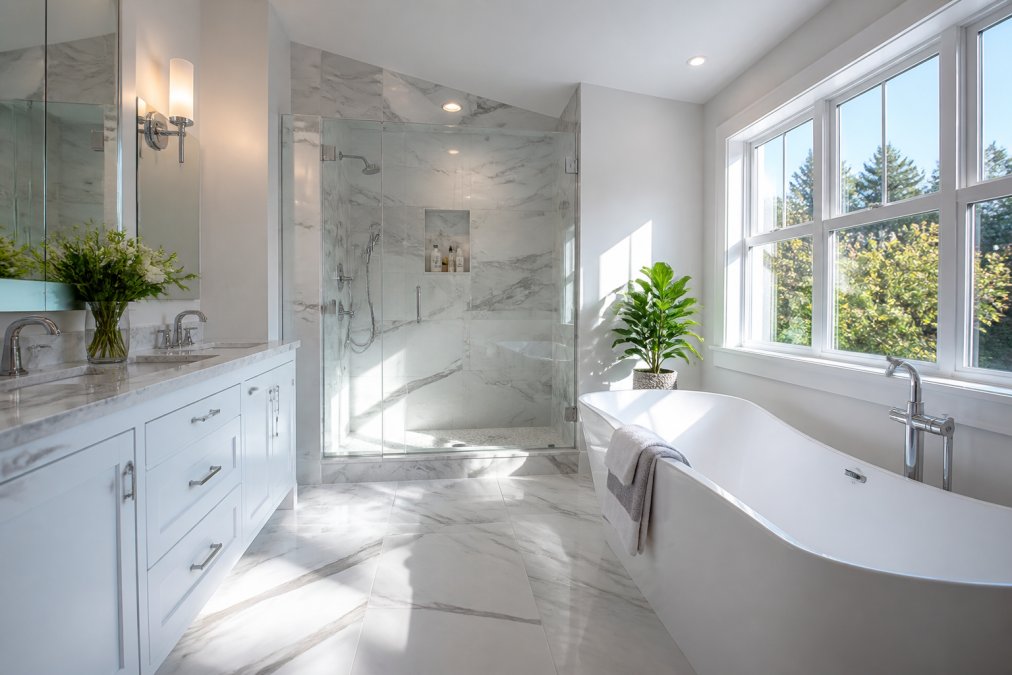
A mid-range renovation introduces better materials and more thoughtful design. You’ll see quality tile work, upgraded fixtures with better finishes, improved lighting design, and often a layout adjustment, perhaps a larger shower or repositioned vanity. Custom tile and waterproofing standards improve durability significantly. Bathrooms at this level feel current and well-designed. Materials hold up better, and the space functions more intuitively. Most homeowners find mid-range renovations deliver a strong return on investment because they balance quality, functionality, and cost.
A luxury renovation is where custom design, premium materials, and specialized work converge. Think heated floors, high-end tile, custom cabinetry, spa-quality fixtures, and often structural changes like removing walls to enlarge the space or creating a spa-like ensuite. The bathroom renovation timeline extends because of the complexity and custom nature of the work. Luxury renovations are investments in lifestyle and property value.
Key Factors Influencing Your Bathroom Renovation Budget
Several concrete factors determine where your project lands within these tiers. Understanding these helps you make trade-off decisions that align with your priorities.
Project scope is the primary driver. A vanity replacement is fundamentally different from a complete bathroom renovation that includes plumbing relocation, electrical upgrades, and structural changes. Tub-to-shower conversions require plumbing work but keep the footprint similar. Walk-in shower installations often require waterproofing upgrades and sometimes floor reinforcement. Master ensuite overhauls involving structural changes, removing walls or adding space, push costs significantly higher because they involve more trades and longer timelines.
Material selection directly impacts both cost and longevity. Tile quality varies enormously. Budget tile is functional but porous and prone to staining. Mid-range tile offers better durability and aesthetic options. Premium tile, natural stone, large-format porcelain, costs more but ages beautifully. The same principle applies to fixtures, cabinetry, and flooring. Your choices here compound across every surface in the space.
Existing conditions matter more than most homeowners realize. A bathroom with solid plumbing, adequate electrical service, and dry walls costs less to renovate than one requiring hidden damage repair, plumbing reconfiguration, or structural corrections. Moisture damage, rot, or outdated electrical systems add discovery costs that weren’t in the original estimate. This is why a thorough site inspection before quoting is essential.
Labour complexity depends on the trades required. A straightforward vanity and tile job requires fewer sub-trades than a project involving plumbing relocation, electrical upgrades, and structural work. Hiring a licensed general contractor ensures proper coordination, but more complex projects require more labour hours and specialized expertise.
Permit requirements affect timeline and cost. Bathroom renovations in most Lower Mainland municipalities require building permits when work involves plumbing, electrical, or structural changes. Permits add inspection requirements and timeline, but they also ensure work meets current building codes. Skipping permits creates liability and future problems when you sell.
Labour Costs and Hiring a Licensed General Contractor
Labour represents a significant portion of your renovation budget. Understanding what you’re paying for helps you evaluate contractor quotes fairly.
A licensed general contractor manages the entire project, coordinates sub-trades, ensures code compliance, and carries WorkSafeBC clearance and Commercial General Liability (CGL) insurance. This coordination work has real value. When plumbing, electrical, tile, and finishing trades must sequence correctly, the general contractor’s project management prevents delays, rework, and cost overruns. Licensed contractors also carry the insurance and bonding that protects you if something goes wrong.
The bathroom renovation timeline depends partly on labour availability and complexity. A straightforward bathroom renovation might take three to four weeks from demolition to final inspection. A master ensuite overhaul with structural changes can extend to eight weeks or longer. Labour costs scale with timeline, longer projects require more labour hours.
When evaluating contractor quotes, distinguish between the contractor’s overhead and actual trade labour. A licensed general contractor carries costs that unlicensed operators don’t: WorkSafeBC coverage, CGL insurance, municipal business licensing, bonding, and administrative overhead. These costs are legitimate and reflect the protection you receive. A quote that seems significantly lower than others may indicate the contractor is cutting corners on insurance, permits, or quality, not offering a better deal.
White Rock Handyman & Renovations provides transparent quotes with no call-out fees for estimates. You get a detailed breakdown of labour, materials, and timeline before work begins. This clarity helps you make informed decisions and understand exactly what you’re paying for. Whether you’re considering a custom bathroom renovation contractor White Rock BC or exploring options across our service areas, we ensure you understand every aspect of your investment.
Bathroom Renovation Permit Requirements and Building Codes
Permits aren’t optional bureaucracy, they’re protection. Building codes exist because bathrooms are high-moisture, high-risk spaces. Improper installation leads to mold, structural damage, and safety hazards.
Most bathroom renovations require permits when they involve plumbing changes, electrical work, or structural modifications. Permit requirements vary by municipality across Surrey, South Surrey, White Rock, Langley, Delta, Cloverdale, and Tsawwassen, but the principle is consistent: inspectors verify that work meets current building codes before you occupy the space.
The permit process typically involves three inspections: rough-in (after plumbing and electrical are installed but before drywall), drywall inspection, and final inspection. Each inspection ensures code compliance at that stage. The bathroom renovation permit requirements exist to prevent costly problems later. A properly permitted and inspected renovation protects both your safety and your property value.
A licensed general contractor handles permits as part of their service. They know local requirements, submit applications, schedule inspections, and correct any code violations the inspector identifies. This removes the burden from you and ensures compliance.
Building codes specify requirements for ventilation, electrical outlets near water sources, waterproofing standards, and structural support. These aren’t suggestions, they’re legal requirements. When you hire a licensed contractor, code compliance is built into the work. When you don’t, you’re betting that your DIY approach or an unlicensed contractor’s shortcuts won’t create problems. That’s a bet most homeowners lose.
Custom Tile and Waterproofing Standards for Durability
Tile and waterproofing are where bathroom durability is actually built. Poor work here leads to mold, structural damage, and costly repairs years later.
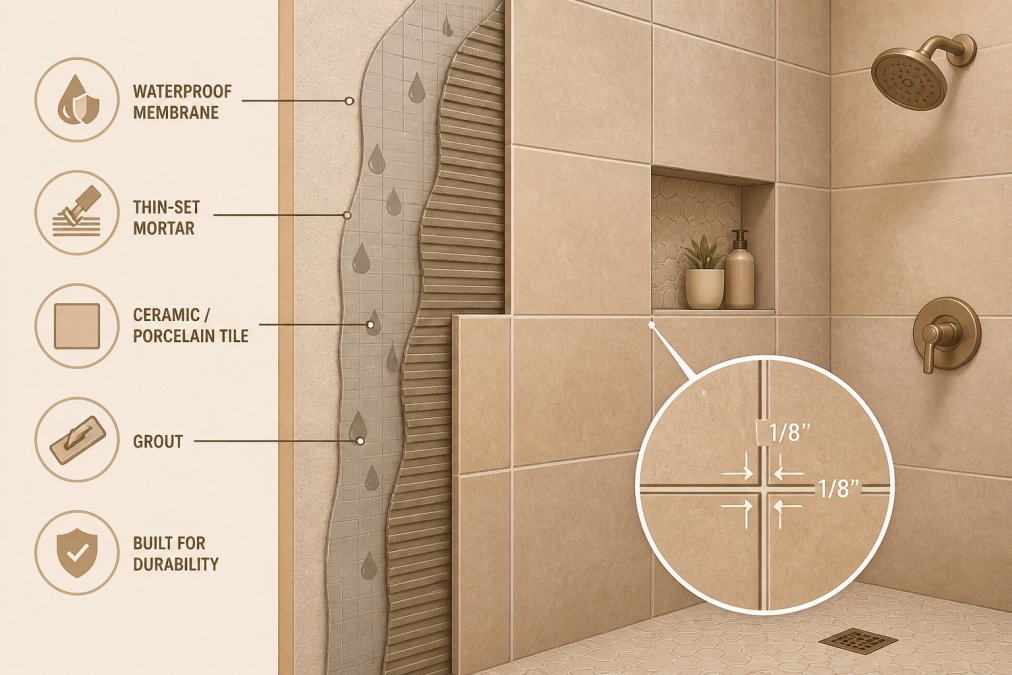
Waterproofing standards require a complete moisture barrier behind tile in wet areas. This isn’t just slapping sealant on drywall. Proper waterproofing involves installing a waterproofing membrane, then tile over it. The membrane catches any water that penetrates grout or tile and directs it to a drain. Without this, water migrates behind the tile, rots framing, and creates mold, problems that don’t appear until significant damage has occurred.
Custom tile work means more than just choosing attractive tile. It means proper substrate preparation, correct thinset application, appropriate grout selection, and sealing where needed. Large-format tile requires different installation techniques than small tile. Natural stone requires different sealers than porcelain. A contractor experienced in custom tile and waterproofing standards knows these distinctions and applies them correctly. Whether you’re installing a curbless tile shower installation Surrey BC or updating your entire bathroom, proper technique is non-negotiable.
The cost difference between basic and high-quality tile installation is modest compared to the cost of fixing water damage later. A bathroom with proper waterproofing and quality tile installation lasts 15+ years without moisture problems. A bathroom with shortcuts develops problems within five years.
Bathroom Renovation Timeline and Project Planning
Timeline matters because it affects your daily life and sometimes your housing situation during renovation.
A straightforward bathroom renovation typically takes three to four weeks. Demolition and rough-in work take one to two weeks. Framing, plumbing, and electrical rough-in follow. Then drywall, tiling, fixture installation, and finishing. Each phase depends on the previous one completing, so delays compound.
More complex projects extend the timeline. A master ensuite renovation with structural changes, custom tile work, and multiple sub-trades can take eight weeks or longer. A tub-to-shower conversion with modest scope might take two to three weeks. A walk-in shower installation with waterproofing upgrades typically takes four to five weeks.
The bathroom renovation timeline also depends on permit inspection scheduling. If the inspector finds code violations during rough-in inspection, corrections must be made before moving to the next phase. This rarely happens with licensed contractors, but it’s a factor in timeline planning.
Realistic timeline expectations prevent frustration. A contractor who promises a complex bathroom renovation in two weeks either doesn’t understand the work or is cutting corners. A contractor who provides a realistic timeline and respects it demonstrates professionalism and proper planning.
Return on Investment and Long-Term Value
A bathroom renovation isn’t just an expense, it’s an investment in your home’s value and your quality of life. Understanding the return helps justify the cost.
Bathroom renovations typically return 50-70% of their cost in resale value, depending on local market conditions and how the renovation compares to similar homes in your area. A basic renovation that brings an outdated bathroom to current standards returns more percentage-wise than a luxury renovation, because the gap between “outdated” and “current” is larger than the gap between “current” and “luxury.”
Beyond resale value, a well-executed bathroom renovation improves daily life. A functional layout, good lighting, quality fixtures, and proper waterproofing create a space you actually enjoy using. A poorly executed renovation, with plumbing problems, water damage, or fixtures that fail, creates frustration and expense.
The long-term value also depends on quality. A mid-range renovation using quality materials and proper installation methods lasts 12-15 years before major updates are needed. A luxury renovation with premium materials can last 20+ years. A budget renovation with shortcuts might need significant work within five to seven years, erasing any initial savings.
Sustainable or eco-friendly upgrades, water-efficient fixtures, proper ventilation to prevent mold, durable materials that don’t require frequent replacement, add long-term value beyond the immediate renovation. These choices reduce water and energy costs and minimize environmental impact.
When evaluating renovation investment, consider both immediate enjoyment and long-term value. A bathroom you’ll use and enjoy for 15 years justifies higher-quality choices than one you’re updating for resale.
A bathroom renovation is a significant decision that affects your home’s functionality, value, and your daily experience. Understanding the cost factors, scope, materials, labour, permits, and timeline, helps you make choices aligned with your priorities and budget.
White Rock Handyman & Renovations brings 37+ years of experience to bathroom renovations across Surrey, South Surrey, White Rock, Langley, Delta, Cloverdale, and Tsawwassen. Our fully licensed, insured, and bonded team handles everything from custom tile and waterproofing to complete master ensuite overhauls. We provide detailed quotes with no call-out fees, manage all permits and inspections, and guarantee work completed to code. Get a free estimate and see how we can transform your bathroom into a space that works for your home and your life.
Frequently Asked Questions
What does a realistic bathroom renovation budget typically include?
A realistic bathroom renovation budget covers demolition, labour, materials (fixtures, tile, flooring), plumbing and electrical upgrades, waterproofing, permits, and contingency reserves. Your actual costs depend on project scope—whether you're doing a full renovation or targeting specific areas like a tub-to-shower conversion. Professional contractors provide detailed cost breakdowns that account for site-specific challenges and material selections. Request a free in-home estimate to understand what your project requires.
How do material choices impact the overall cost of a bathroom renovation?
Material selection significantly affects your investment. Premium fixtures, custom tile work, and high-end finishes increase costs substantially compared to mid-range alternatives. Waterproofing quality and flooring materials also influence the budget. Sustainable or accessibility-focused upgrades may add upfront expense but deliver long-term value. A licensed general contractor can guide you through options that balance aesthetics, durability, and your budget tier during the consultation phase.
What permits are required for bathroom renovations, and who handles them?
Bathroom renovations typically require municipal building permits, especially when involving plumbing, electrical work, or structural changes. Your contractor must obtain WorkSafeBC clearance letters and hold Commercial General Liability (CGL) insurance to perform permitted work. Permit requirements vary by municipality across Surrey, Langley, Delta, and other Lower Mainland communities. A licensed general contractor manages the permit application, inspections, and compliance documentation—protecting you from code violations and liability.
How long does a bathroom renovation typically take?
A full bathroom renovation typically spans 3–6 weeks, depending on project complexity and scope. Simple updates like vanity replacement may take 1–2 weeks, while master ensuite overhauls or walk-in shower installations with custom waterproofing can extend to 8+ weeks. Permit timelines, material availability, and unforeseen structural issues can affect the schedule. Your contractor provides a realistic bathroom renovation timeline upfront and keeps you informed of any delays affecting the project schedule.