
Table of Contents
- What to Look for in a Bathroom Renovation Company
- How to Verify WorkSafeBC Clearance and Insurance
- Bathroom Renovation Permit Requirements in BC
- Questions to Ask Your Bathroom Renovation Contractor
- Understanding Your Bathroom Renovation Project Timeline
- Red Flags: What to Avoid When Hiring a Bathroom Renovation Company
- Conclusion
Last Updated: August 3, 2026
Choosing the right bathroom renovation company is one of the most important decisions you’ll make as a homeowner in British Columbia. A bathroom renovation can transform your daily routine and add significant value to your property, but only if you hire the right contractor. At White Rock Handyman & Renovations, we understand that homeowners across Surrey, South Surrey, White Rock, Langley, Cloverdale, and Delta face genuine uncertainty when vetting contractors for bathroom work. This guide walks you through exactly what to look for, how to verify credentials, and what questions separate trustworthy professionals from those who cut corners.
A poorly executed bathroom renovation, incomplete waterproofing, code violations, missed timelines, or hidden costs, can cost tens of thousands to remediate. The right contractor eliminates these risks entirely. Below, we’ll show you the specific credentials to verify, the questions to ask, and the red flags that should end your search immediately.
What to Look for in a Bathroom Renovation Company
When evaluating a bathroom renovation company, ask three questions: Are they qualified? Are they insured? Will they communicate? A reputable contractor checks all three boxes consistently.
The best bathroom renovation companies in BC operate with full transparency from the first conversation. They provide detailed written quotes before work begins, explain their process clearly, and stand behind their work with warranties. They understand that bathroom renovations involve structural changes, plumbing, electrical work, and waterproofing, all requiring specialized knowledge and adherence to local building codes.
Start by looking for companies with substantial experience in bathroom work. Vanities, tile work, walk-in shower installations, and tub-to-shower conversions are specialized skills. Ask potential contractors how many bathroom renovations they’ve completed in the past three years. If they hesitate or give vague answers, that’s a warning sign.
Licensed, Insured, and Bonded Credentials
A licensed bathroom renovation company holds the credentials that matter most to your protection. In British Columbia, contractors performing renovations must hold a valid business licence from their municipality, whether Surrey, White Rock, Langley, or any other Lower Mainland community. This licence is a legal requirement.
Beyond municipal licensing, the contractor must carry Commercial General Liability (CGL) insurance. This coverage protects you if someone is injured on your property or if your home is damaged during the renovation. CGL insurance is non-negotiable. If a contractor refuses to provide proof of coverage, do not hire them.
Bonding is the third credential to verify. A bond guarantees that the contractor will complete the work as promised. If they abandon the job or fail to pay suppliers, the bond covers those losses.
Ask the contractor to provide copies of their business licence, current CGL insurance certificate, and bonding documentation. Reputable contractors keep these documents readily available. If they say “it’s on file” or offer excuses, that’s a red flag.
How to Verify WorkSafeBC Clearance and Insurance
WorkSafeBC clearance is a critical credential that many homeowners overlook. If the contractor employs workers, they must maintain a valid WorkSafeBC account and be in good standing with the province’s workplace safety regulator.
Checking WorkSafeBC Clearance Letters
A WorkSafeBC clearance letter confirms that the contractor has no outstanding claims, penalties, or safety violations. Ask the contractor for a recent clearance letter. They can obtain this from WorkSafeBC directly, and it’s a document they should provide without hesitation.
You can also verify the contractor’s WorkSafeBC account status independently. Visit the WorkSafeBC website and use their public search tool to look up the contractor’s account number. If the account is inactive, suspended, or shows outstanding issues, do not proceed.
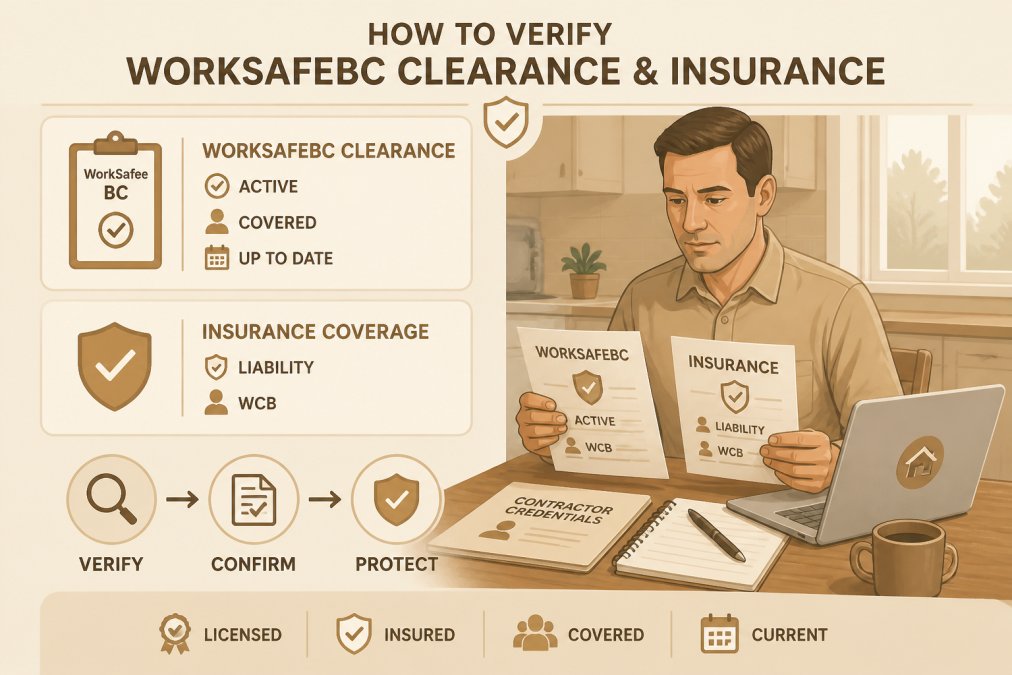
A contractor in good standing with WorkSafeBC has demonstrated a commitment to worker safety and legal compliance. This matters directly to your renovation, as unsafe practices lead to injuries, delays, and liability for you.
Confirming Commercial General Liability Coverage
Your contractor’s CGL insurance protects both of you. Request a copy of the current insurance certificate, which should include your address as an “additional insured.” This means the policy covers claims related to work performed at your property.
The certificate should list specific coverage amounts for bodily injury, property damage, and personal injury. Call the contractor’s insurance broker to verify the certificate is authentic and the policy is active. This takes 10 minutes and eliminates doubt.
Bathroom Renovation Permit Requirements in BC
Most bathroom renovations in BC require a building permit from your municipality. Permits exist to ensure work meets building codes and protects your home’s structural integrity and safety.
Bathroom renovations that trigger permit requirements include Walk-in Shower Installations & Tile Work, tub-to-shower conversions, plumbing changes, electrical work, and structural modifications. Even cosmetic work like vanity upgrades and tile installation may require permits depending on scope.
Your contractor should be familiar with your municipality’s specific permit requirements and guide you through the process. A reputable bathroom renovation company handles permit applications as part of their standard service. They know local inspectors, understand what passes inspection, and schedule inspections at the right stages.
Unpermitted work creates serious problems when you sell your home. Buyers’ lenders will require disclosure of unpermitted renovations, which can kill a sale or force you to remediate the work at your own expense.
Ask your contractor directly: “Will this project require permits?” If they say no when permits are clearly needed, that’s a major red flag. A trustworthy contractor explains the permit process and builds it into their timeline and quote.
Questions to Ask Your Bathroom Renovation Contractor
Before hiring any contractor, you need answers to specific questions that reveal how organized they are and whether they’ve thought through your project carefully.
Start with the fundamentals: “How many bathroom renovations have you completed in the past three years?” “Can you provide references from recent bathroom projects?” “What’s your typical timeline for a project like mine?” A contractor who hesitates or gives vague answers hasn’t done enough work to be confident.
Ask about their process: “What’s included in your quote?” “What happens if we discover issues during the renovation?” “How do you handle changes once work has started?” These questions reveal whether they’ve built contingency into their planning.
Project Timeline and Communication
Your bathroom renovation will disrupt your daily routine. You need to know exactly how long it will take and how the contractor will keep you informed.
Ask: “What’s your projected timeline?” “How often will you communicate with me?” “What’s the best way to reach you?” A professional contractor provides a written timeline broken down by phase, explaining dependencies. For example, waterproofing must be complete before tile installation, and inspections must pass before drywall goes up.
Communication frequency matters enormously. The best contractors provide daily or near-daily updates via text, email, or in person. If a contractor says they’ll “check in occasionally,” that’s not sufficient for a major renovation.
Ask about contingency planning: “What happens if we encounter structural problems?” “How do you handle supply delays?” “What’s your process if work doesn’t pass inspection?” A seasoned professional has seen problems before and has strategies to solve them.
Warranty and Satisfaction Guarantees
Every reputable bathroom renovation company stands behind their work with a warranty. Ask: “What warranty do you provide?” “What does it cover?” “How long does it last?” A standard warranty covers defects in workmanship and materials for at least one year.
Ask about their satisfaction guarantee: “What happens if I’m not satisfied with the finished work?” A contractor confident in their quality will address any legitimate concerns.
Get all warranty terms in writing as part of your contract. A written warranty is enforceable; a verbal promise is not.
Understanding Your Bathroom Renovation Project Timeline
A realistic timeline is one of the best predictors of a successful renovation. Unrealistic timelines often signal inexperience or corner-cutting.
A typical bathroom renovation takes 4 to 8 weeks, depending on scope. A simple vanity upgrade might take 2 to 3 weeks. A full bathroom transformation including Custom Bathroom Renovations with new plumbing, electrical work, and waterproofing can take 8 to 12 weeks. These timelines account for inspections, material delivery, and unforeseen issues.
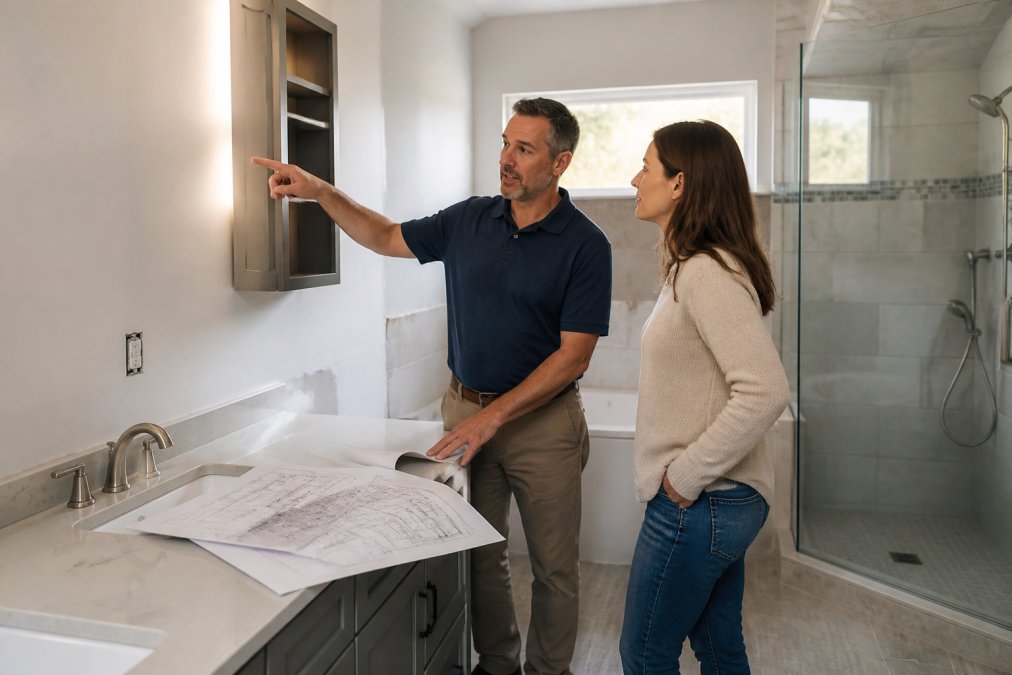
The timeline depends on scope, material availability, and inspection requirements. Custom tile or specialty fixtures may require longer lead times. Your municipality’s inspection schedule can add days or weeks.
A contractor should provide a phase-by-phase timeline in writing. For example:
- Week 1-2: Demolition and rough-in plumbing/electrical
- Week 3: Waterproofing and inspection
- Week 4-5: Tile installation
- Week 6: Fixture installation and final plumbing
- Week 7: Painting and finishing
- Week 8: Final inspection and cleanup
This level of detail shows the contractor has planned carefully and understands dependencies. If a contractor gives you a single number without breaking it down by phase, they haven’t planned thoroughly enough.
Ask about potential delays: “What could slow this down?” “How do you handle supply delays?” “What happens if inspection fails?” A contractor who acknowledges potential issues and has strategies to address them is being realistic.
Red Flags: What to Avoid When Hiring a Bathroom Renovation Company
Certain warning signs should end your search immediately.
First, any contractor who won’t provide proof of licensing, insurance, or WorkSafeBC clearance is a non-starter. This is a legal requirement and your primary protection.
Second, watch for vague or incomplete quotes. A professional bathroom renovation company provides a detailed, itemized quote listing every component, labour cost, and material cost. Vague quotes hide surprises.
Third, avoid contractors who want large upfront payments. A reasonable payment schedule might be 25 percent down to secure the start date, 50 percent at the midpoint, and 25 percent upon completion. Large upfront payments suggest the contractor isn’t confident they’ll complete the work.
Fourth, be wary of contractors who discourage permits or suggest you can skip them. Permits are not optional, and a contractor who discourages them is either inexperienced or willing to cut corners.
Fifth, trust your instinct about communication. If a contractor is hard to reach or seems disorganized during the quote phase, they’ll be worse during the actual renovation.
Sixth, avoid contractors who have no references or refuse to provide them. A professional with satisfied customers is happy to share contact information.
Finally, be cautious of contractors who pressure you to decide quickly. A legitimate contractor understands you need time to make this decision.
Conclusion
Hiring the right bathroom renovation company is about verifying credentials, asking the right questions, and trusting your instincts. You need a contractor who is licensed, insured, and bonded; who maintains current WorkSafeBC clearance; who provides detailed written quotes and timelines; and who communicates clearly throughout the project.
Choosing a bathroom renovation contractor shouldn’t feel like a gamble. At White Rock Handyman & Renovations, we’ve built our reputation by maintaining full licensing and insurance, providing transparent quotes, and delivering bathroom renovations completed to code. Our team handles everything from Vanity & Fixture Upgrades to complete custom bathroom transformations, with satisfaction guaranteed. Get a free estimate today and work with a contractor who stands behind every project.
Frequently Asked Questions
What credentials should I verify before hiring a bathroom renovation company?
Always confirm the contractor holds a valid business license from their municipal authority (such as Surrey or White Rock), carries current Commercial General Liability insurance, and holds a valid WorkSafeBC clearance letter. Ask to see copies of all three documents. A licensed, insured, and bonded bathroom renovation company protects you from liability if something goes wrong during your vanity upgrade, tile work, or walk-in shower installation. Never hire someone who cannot provide proof of these credentials.
How do I verify a contractor's WorkSafeBC clearance?
Request a copy of the contractor's WorkSafeBC clearance letter directly from them. You can also contact WorkSafeBC online to confirm the status of a business. A valid clearance shows the contractor maintains proper safety standards and workers' compensation coverage. For bathroom renovation work involving plumbing, tile, and waterproofing, WorkSafeBC compliance is essential. If a contractor cannot produce a current clearance letter, do not proceed with your project.
What permits do I need for a bathroom renovation in BC?
Most bathroom renovations in BC require permits, especially if you are replacing plumbing fixtures, converting a tub to a walk-in shower, or moving walls. Permit requirements vary by municipality (Surrey, White Rock, Langley, and Delta each have different standards). Your contractor should handle permit applications and inspections as part of the bathroom renovation project timeline. Unpermitted work can affect your home's resale value and void your insurance. Always confirm your contractor will obtain necessary permits before starting work.
What questions should I ask a bathroom renovation contractor before hiring?
Ask about their experience with bathroom vanity upgrades, tile work, and walk-in shower installations. Request references from recent bathroom renovation projects. Clarify the project timeline, including start and completion dates. Ask how they handle changes or unexpected issues. Request a detailed, written quote with no hidden fees. Confirm they will obtain all required permits and handle inspections. Ask about their warranty on workmanship. A reputable contractor will answer all questions clearly and provide everything in writing before work begins.