
Table of Contents
- What Professional Bathroom Vanity Installation Services Include
- Why Hire a Professional for Bathroom Vanity Installation
- Bathroom Vanity Plumbing Requirements You Need to Know
- Vanity Installation Best Practices for Long-Term Performance
- The Bathroom Vanity Installation Process: What to Expect
- Permits, Codes, and Compliance for Bathroom Renovations
- Service Areas Across the Lower Mainland
- Conclusion
Last Updated: August 7, 2026
What Professional Bathroom Vanity Installation Services Include
Professional bathroom vanity installation goes far beyond placing a cabinet under your sink. When you hire a licensed contractor, you’re getting comprehensive plumbing integration, structural support, waterproofing, and code compliance. At White Rock Handyman & Renovations, we handle every layer of the installation process to ensure your new vanity functions flawlessly for years to come.
A complete installation includes removal and safe disposal of your existing vanity, assessment of plumbing and wall structure, precise leveling and wall anchoring, integration of water supply lines and drain assembly, sink mounting and faucet connection, and final sealing with moisture-resistant materials. Each step builds on the previous one, a drain that doesn’t align properly, supply lines that aren’t secured, or inadequate sealing around the backsplash creates problems down the road.
The difference between DIY and professional work becomes obvious when water starts flowing. A vanity that looks level but isn’t will cause water to pool in your countertop. Supply lines that aren’t properly secured vibrate and eventually leak. Drain connections that aren’t sealed allow moisture to seep into your wall cavity, causing mold and structural damage.
Professional installation also means understanding your home’s specific plumbing layout. Older homes in Surrey, South Surrey, and Langley often have galvanized steel pipes that require different handling than modern copper or PEX lines. A licensed contractor assesses these variables before starting work, preventing costly surprises mid-project.
Why Hire a Professional for Bathroom Vanity Installation
The most common reason homeowners call us after attempting DIY vanity installation is water damage. Leaks that start small become catastrophic when undetected for weeks. By the time you notice soft drywall or mold smell, damage extends into the wall cavity where remediation costs multiply quickly.
Professional installation protects your investment in two critical ways: it’s done right the first time, and it’s backed by proper insurance. When you hire White Rock Handyman & Renovations, every installation is completed by a fully licensed, insured, and bonded team. We carry Commercial General Liability insurance and maintain WorkSafeBC clearance letters, which means if anything goes wrong, a burst pipe, water damage, or injury, you’re protected, not liable.
The structural integrity of your bathroom depends on proper installation. A vanity weighing 150 pounds or more needs to be anchored securely to wall studs. Anchoring into drywall alone will eventually fail, causing your vanity to sag or pull away from the wall. This creates gaps where water infiltrates, leading to mold and deterioration.
Time is another factor. A straightforward vanity installation typically takes a full day when done properly, including careful removal of the old vanity, assessment of conditions, installation of the new unit, plumbing connections, sealing, and testing.
Professional installation also includes guidance on maintenance and care. We explain how to protect your new vanity from moisture damage, what products to use for cleaning, and what to watch for over time. This knowledge extends the life of your investment significantly.
Bathroom Vanity Plumbing Requirements You Need to Know
Bathroom vanity plumbing is more complex than most homeowners realize. Understanding these requirements helps you communicate with your contractor and recognize quality work when it’s done.
Water Supply Line Integration
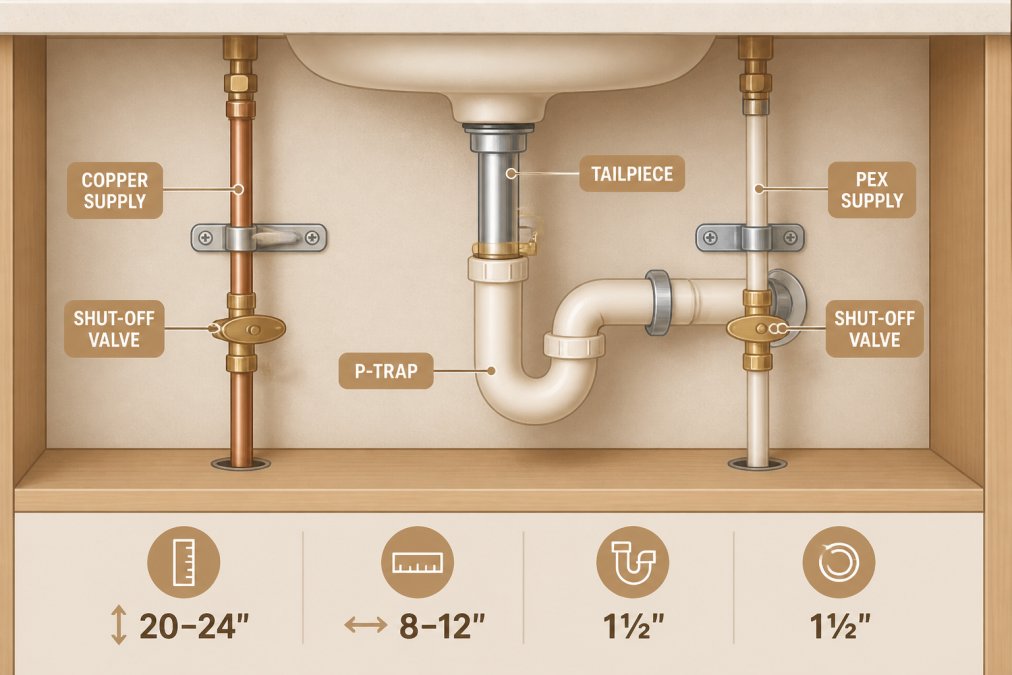
Water supply lines deliver hot and cold water to your faucet and must be properly sized, securely supported, and positioned to avoid kinks or stress that could cause leaks. Most modern installations use flexible PEX tubing or rigid copper pipe, depending on your home’s existing plumbing system and local code requirements.
Supply lines need shut-off valves positioned at the vanity itself or nearby, allowing you to stop water flow for maintenance without shutting off water to your entire home. These valves must be accessible, not hidden behind cabinetry.
Supply lines also require proper support through mounting brackets at regular intervals, preventing vibration and extending the life of connections.
Drain Assembly and P-Trap Configuration
The drain assembly carries wastewater from your sink to the main drain line. It includes the drain opening, the tailpiece, and the P-trap, the curved section below the vanity that holds water to create a seal, preventing sewer gases from entering your bathroom.
The P-trap must be positioned correctly. If too high, water drains slowly and debris accumulates. If too low, the seal breaks, allowing gases back into your bathroom. The trap also needs a clean-out plug for clearing blockages.
Drain lines must slope toward the main drain at a consistent angle, typically 2 centimeters per meter (approximately 1/4 inch per foot). This ensures water flows downward by gravity, carrying debris with it. Horizontal sections create traps where water and debris pool, leading to blockages.
Shut-Off Valve Placement and Accessibility
Shut-Off valves control water flow to your vanity and must be positioned where you can reach them in an emergency. Building codes across the Lower Mainland require accessible shut-off valves for all fixtures. A valve buried behind a cabinet doesn’t meet code and creates a dangerous situation if a pipe bursts.
Professional installation positions shut-off valves at a height and location where you can access them easily. They should be tested to confirm they shut off water flow completely.
Vanity Installation Best Practices for Long-Term Performance
The difference between a vanity that lasts 10 years and one that lasts 25 years often comes down to installation practices that most homeowners never consider.
Leveling and Wall Anchoring
A vanity that isn’t level creates multiple problems. Water pools in the countertop instead of draining toward the sink. Doors and drawers don’t close properly, stressing hinges and hardware. The cabinet shifts over time, stressing plumbing connections and creating gaps where water seeps in.
Proper leveling starts with assessing the floor. Most bathroom floors aren’t perfectly level, and professional installation includes shimming, using thin wedges to adjust the vanity so it’s level front-to-back and side-to-side while sitting firmly on the floor.
Wall anchoring is equally critical. Vanities are secured to wall studs using heavy-duty fasteners. If the wall is tiled or finished, locating studs requires experience and the right tools. Anchoring into drywall alone will eventually fail, causing the vanity to sag and plumbing connections to stress.
Caulking, Sealing, and Moisture Protection
Caulking around the vanity backsplash and where the vanity meets the wall is essential moisture protection. Silicone caulk creates a water-tight seal that prevents water from seeping into gaps. Over time, caulk cracks and deteriorates and needs replacement every few years as part of routine maintenance.
The area where the vanity top meets the wall is particularly vulnerable. Water splashes from the sink and runs down the backsplash. If this area isn’t properly sealed, water enters the wall cavity.
Professional installation includes applying high-quality silicone sealant around all water-exposed areas. We use products that remain flexible as your home expands and contracts with temperature changes, preventing cracks that break the seal.
The Bathroom Vanity Installation Process: What to Expect
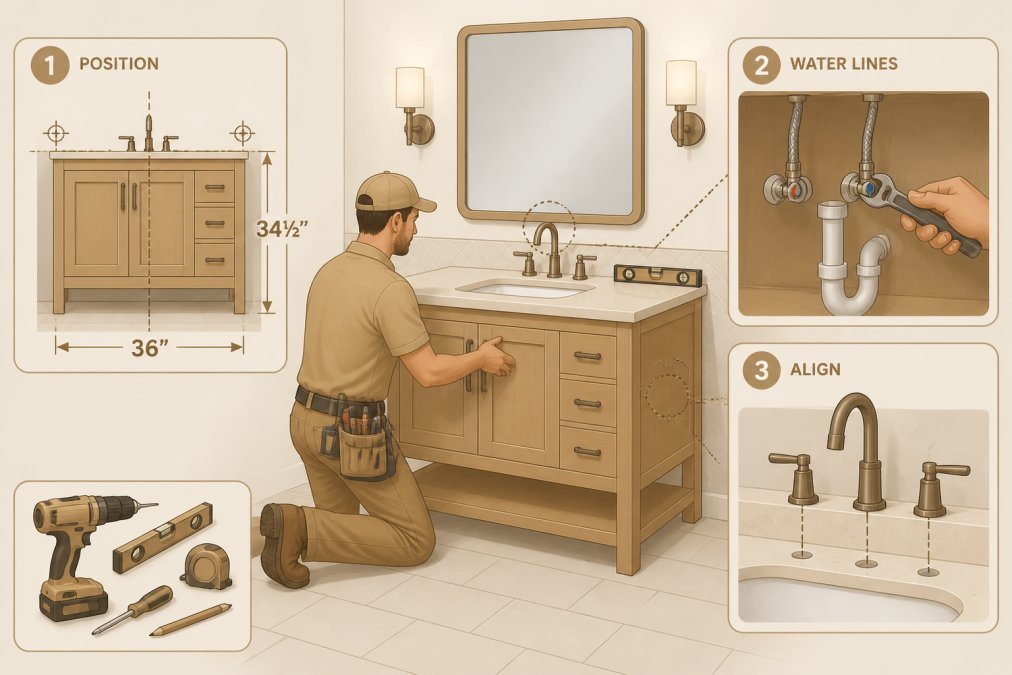
Understanding what happens during professional installation helps you prepare for the work and recognize quality craftsmanship. The process typically unfolds over one full day.
Pre-Installation Plumbing Assessment
Before any work begins, we assess your existing plumbing and the space where the new vanity will go. This assessment identifies potential issues: old galvanized pipes that may need replacement, structural concerns with the wall, or plumbing that doesn’t align with the new vanity’s drain opening.
We check the condition of shut-off valves to ensure they’re functional and measure the space precisely to confirm the new vanity fits. We identify whether existing supply lines and drain can be reused or need replacement.
This assessment prevents surprises during installation. If we discover that supply lines need to be rerouted or the wall needs additional bracing, we discuss those findings with you and adjust the plan before starting work.
Removal and Disposal of Your Old Vanity
Removing the old vanity carefully prevents damage to walls, flooring, and plumbing. We shut off water at the main valve, then disconnect supply lines and drain assembly. We unbolt the vanity from the wall and carefully lift it out, protecting your flooring and walls throughout.
The old vanity and removed plumbing components are disposed of responsibly. Once the old vanity is out, we inspect the wall and floor where it was positioned, looking for water damage, mold, or structural issues. If we find problems, we address them before installing the new vanity.
Installation, Connection, and Testing
The new vanity is positioned, leveled, and secured to wall studs. Supply lines are connected, either reusing existing lines if they’re in good condition or running new lines if needed. The drain assembly is connected to the existing drain line with proper slope and P-trap configuration.
The sink is mounted to the countertop, and the faucet is installed and connected to the supply lines. We caulk around the backsplash and where the vanity meets the wall using high-quality silicone sealant. Finally, we turn water back on and test the entire system, checking for leaks at every connection point and ensuring water drains properly.
We test the shut-off valves to confirm they work and show you where they’re located. We explain how to maintain your new vanity and what to watch for over time.
Permits, Codes, and Compliance for Bathroom Renovations
Bathroom vanity installation in British Columbia requires compliance with the National Plumbing Code of Canada and local municipal bylaws. In the Lower Mainland communities we serve, Surrey, South Surrey, White Rock, Langley, Delta, Cloverdale, and Tsawwassen, each municipality has specific requirements for plumbing work and bathroom renovations.
Permits are required for most bathroom vanity installations, particularly when plumbing is being modified or relocated. The permit process includes an inspection by a municipal building official before work begins and after completion, confirming that the work meets code requirements and protecting you by ensuring the work is done to standard.
White Rock Handyman & Renovations holds the necessary municipal business licensing across all our service areas and maintains WorkSafeBC clearance letters for all crew members. We handle permit applications and scheduling inspections as part of the installation process. You don’t have to navigate the permit system yourself or worry about whether your installation meets code.
Code compliance covers more than just plumbing. It includes structural requirements for wall anchoring, electrical considerations if your vanity includes lighting or outlets, and ventilation requirements to prevent moisture accumulation.
Service Areas Across the Lower Mainland
White Rock Handyman & Renovations serves homeowners throughout the Lower Mainland, including Surrey, South Surrey, White Rock, Langley, Delta, Cloverdale, and Tsawwassen. We understand the local plumbing codes, building requirements, and contractor standards that apply in each municipality.
Whether your home is in a newer subdivision or an older established neighbourhood, we have experience with the plumbing systems and building practices common in your area. We’re familiar with local inspectors and municipal requirements, which simplifies the permit and inspection process.
If you’re considering a bathroom vanity installation or exploring broader bathroom improvements, our custom bathroom renovation contractor South Surrey BC services extend beyond vanity work to full-scale transformations. Whether you’re planning a simple vanity upgrade or a comprehensive bathroom overhaul, we bring the same attention to detail and code compliance to every project. Contact us for a free estimate. We’ll assess your specific situation, discuss your options, and provide a detailed quote with no call-out fees or hidden charges. Our 37+ years of industry experience means we’ve handled countless bathroom renovations across the region.
Bathroom vanity installation seems straightforward until you’re actually doing it. The plumbing connections, structural anchoring, waterproofing, and code compliance create complexity that separates professional results from DIY frustration. White Rock Handyman & Renovations brings 37+ years of experience, full licensing and insurance, and a commitment to code-compliant work that protects your home and your investment. Get a free estimate from our team today, no call-out fees, detailed quotes, and satisfaction guaranteed.
Frequently Asked Questions
Why is professional bathroom vanity installation critical for preventing water damage?
Improper installation creates gaps where water seeps behind walls and under flooring, leading to mold, structural rot, and costly repairs. Professional contractors ensure proper caulking, sealing, and plumbing connections that protect your home. Licensed installers follow building code standards and use moisture-resistant techniques that DIY approaches often miss, safeguarding your investment for years to come.
What certifications should a bathroom renovation contractor hold in BC?
In British Columbia, your contractor must hold a valid Provincial Class B General Contractor license, carry Commercial General Liability (CGL) insurance, and maintain a WorkSafeBC clearance letter. They should also hold municipal business licensing for Surrey, Langley, Delta, and other Lower Mainland communities where they operate. These credentials ensure they meet WorkSafeBC safety standards and comply with local building codes.
Do plumbers typically install vanities, or do I need a general contractor?
Plumbers focus on water supply and drain work, while general contractors manage the full installation including cabinetry, countertops, wall anchoring, and finishing details. A licensed general contractor coordinates all trades and ensures your bathroom vanity installation meets code requirements. For complete bathroom vanity renovations, a full-service contractor handles the entire project without coordinating multiple trades.
How do I ensure my vanity installation meets local building codes?
Hire a licensed general contractor familiar with BC building codes and municipal requirements in your area. Your contractor should pull permits where required, schedule inspections, and document compliance. They'll assess your sub-floor condition, ensure proper plumbing connections, and verify wall anchoring meets code. Licensed professionals stay current with code changes and protect you from costly violations or failed inspections.